
Upon seeing ByteDance's BAGEL multimodal model and Google's Lyria music generation tool, it suddenly dawned on me: the creative industry is standing at an unprecedented turning point. Once upon a time, design works that took artists months to complete can now be generated by AI in a few seconds with dozens of alternatives; chord arrangements that musicians racked their brains for can be given professional-grade advice by AI through real-time interaction. This is not only an improvement in efficiency, but also like accessing a "creative coprocessor" in our brains.
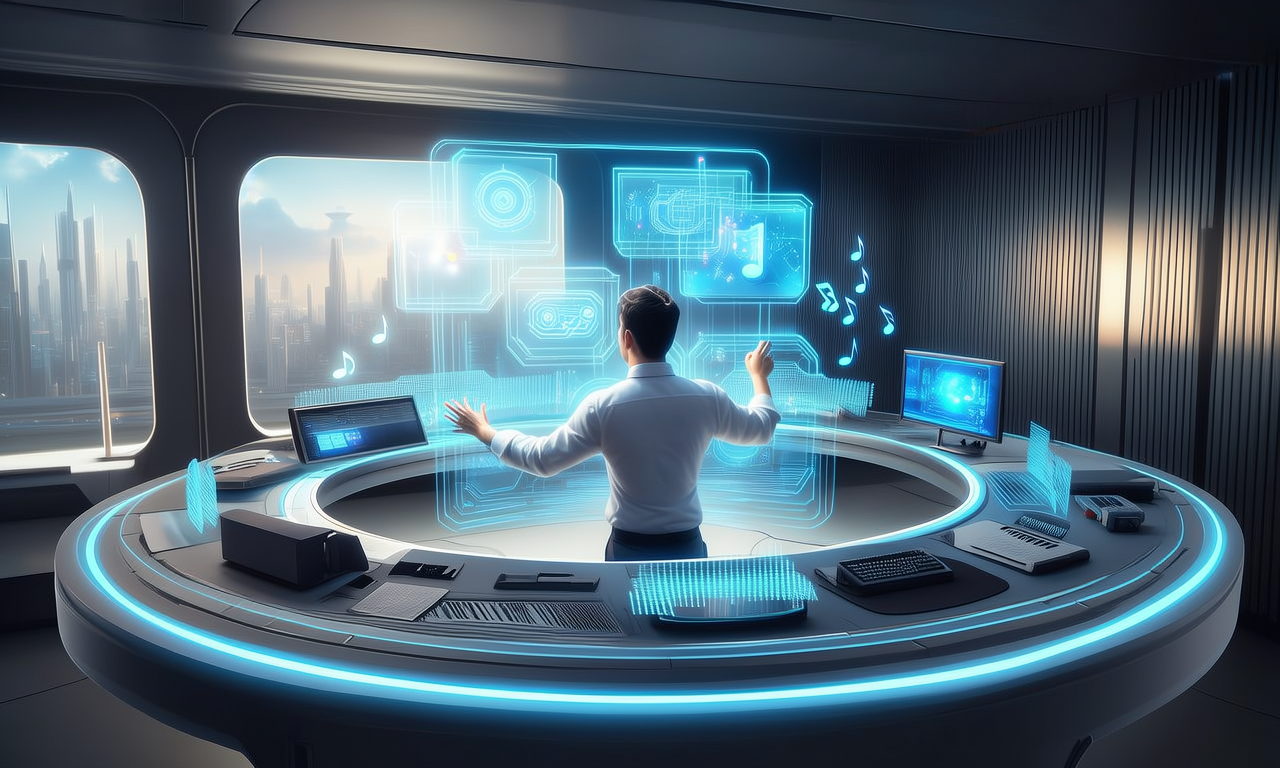
Take BAGEL as an example, this model that can simultaneously process graphics and video is like a "mechanical exoskeleton" for creative workers. Imagine an advertising agency's work scene: the copywriter puts forward "want a summer beach sense of vitality", the AI instantly generates 20 groups of visual solutions, but also according to the feedback instantly adjust the color tone, character posture and even background details. Last year, the case of an international 4A company showed that after using similar tools, the proposal cycle was shortened from 3 weeks to 72 hours, while customer satisfaction was increased by 40%.
When creativity meets algorithms: collision or fusion?
Some people worry that AI will "industrialize" creativity, but the opposite may be true: the Lyria music generator is a good example - it doesn't replace musicians, but rather automates the time-consuming basics of music theory and harmonic rules. Just as electronic synthesizers have not wiped out the music industry, they have spawned a whole new genre. Acclaimed producer Damon Albarn recently revealed that the arrangements for 70% on his new album were done in collaboration with AI, but "it's always going to be humans who decide which notes to leave in."
The changes in the movie and television industry are even more shocking. The internal data of a streaming media platform shows that after using AI assistance, the trailer production cost has been reduced by 65%, but the click conversion rate has been increased by 22%.The secret behind this lies in the fact that multimodal AI can quickly analyze the finished material, automatically match the most eye-catching lens combinations, and also adjust the pace of editing according to the target audience's preferences. No wonder even Nolan said, "In the next five years, directors who won't use AI tools may fall behind."
New challenges arising from the democratization of creativity
Of course, questions arise. When everyone can use AI to generate professional-grade work, how should the value of creativity be defined? Last year, there was an intriguing case: the award-winning work of an emerging designer was later revealed to be 80% completed by AI, triggering a big discussion in the industry. Perhaps the future of the creative industry will be divided into two tracks: one is the AI-enabled "hyper-productivity" field, and the other is the "handmade creativity" market, which emphasizes the uniqueness of human beings - just like today's mechanical watches and handmade watches. The other is the "handmade creativity" market that emphasizes human uniqueness - just like the coexistence of mechanical watches and handmade watches today.
But one thing is certain: those who know how to treat AI as a "creative partner" rather than a simple tool will win the next decade. After all, even the most powerful BAGEL can't draw human emotions, and even the smartest Lyria can't write a real life story. Perhaps this is the most precious gift that multimodal AI brings to the creative industry - it frees our hands, so that we have more energy to polish those things that machines can never replace: the temperature of humanity.

Comment List (10):
Load More Comments Loading...