
Watching Cognition Labs launch Devin, a fully autonomous software engineer, and the news of Cisco using AI to handle 60% customer service cases, I can't help but wonder: is software development really headed for complete automation? To be honest, as someone who has witnessed the evolution of AI technology from code-completion to autonomous programming, this question is both exciting and a bit unsettling. While it's true that tools like Claude Code can dramatically improve efficiency, I'm afraid it's still too early to say that they will completely replace human developers.
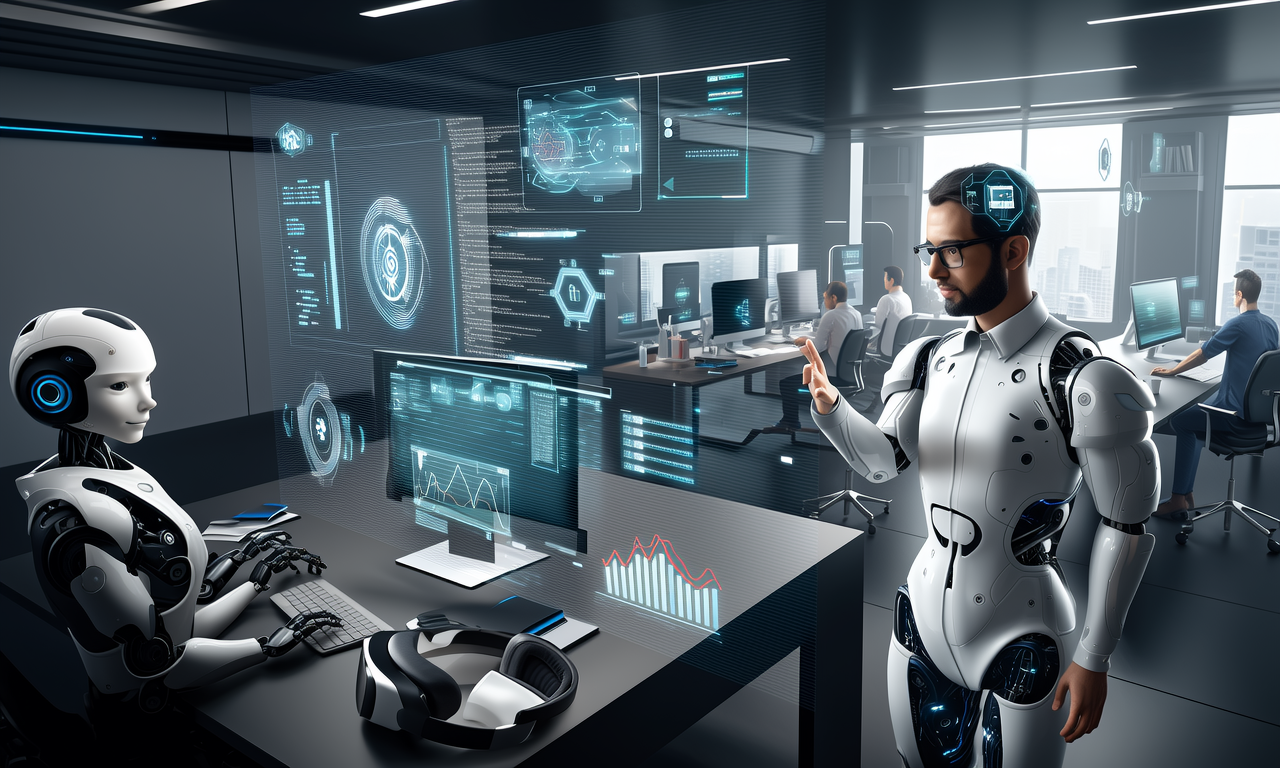
The double-edged sword of automation tools
From my personal experience, AI programming assistants are best at repetitive tasks: auto-completion, code formatting, simple bug fixes... but when it comes to innovative architectural design or complex business logic, I find I still have to do it myself. Like Devin, a "full-stack AI engineer" can handle specific tasks, but I'm afraid it will take a long time for me to evolve to understand the product manager's wild ideas or to weigh the business considerations behind the technical solutions.
Interestingly, recent GitHub statistics show that developers using Copilot are 401 TP3T more efficient in processing algorithmic problems, but the time consumed in system design is almost unchanged. This suggests that AI is more of a "super shortcut" than a true replacement.
The "humans only" that AI can't handle.
I remember last month our team received an urgent project to develop a customized system for a medical institution within two weeks. the AI helped us quickly build the basic framework, but the real headache was to understand the ambiguous description of the needs of the doctors - they couldn't tell what they wanted. This kind of process requires repeated communication, trial and adjustment, and the current AI is still difficult to handle.
In addition, debugging AI-generated code is sometimes even more time-consuming. Once I found a weird bug and realized that the AI had taken the date formatting "for granted". This kind of contextual blind spot is where experienced developers are valuable.
The future is more likely to be "human-machine collaboration".
Cisco's case actually gives one possibility: 60% of the 1.8 million support cases are automated, leaving 40% that still require human intervention. Software development is likely to follow this ratio as well - routine tasks are given to AI, while innovative design, requirements analysis and critical decisions are left to humans.
The concept of "independent contributor team" proposed by OpenAI is very interesting: each developer brings his or her own AI assistant and focuses on the area of expertise. This model not only retains human creativity, but also enjoys the efficiency dividend of AI. After all, the best technology is not to replace human beings, but to let us focus more on the value of "human".
So back to the original question: complete automation? Unlikely in the short term. But in the next 5-10 years, developers who don't know how to use AI tools will probably be inching their way up just as much as those who don't know how to use IDEs now. This change is not a replacement, it's an upgrade in capabilities.

Comment List (10):
Load More Comments Loading...