
Have you ever experienced the moment when you are tortured by Excel sheets? Now, AI office tools are quietly changing the way we work. To be honest, the first time I saw an AI table processing tool like Shortcut, I was half-convinced, but the numbers don't lie - it really is a full 10 times faster than manual work! This got me thinking: the time may have come for AI to truly reinvent the office.
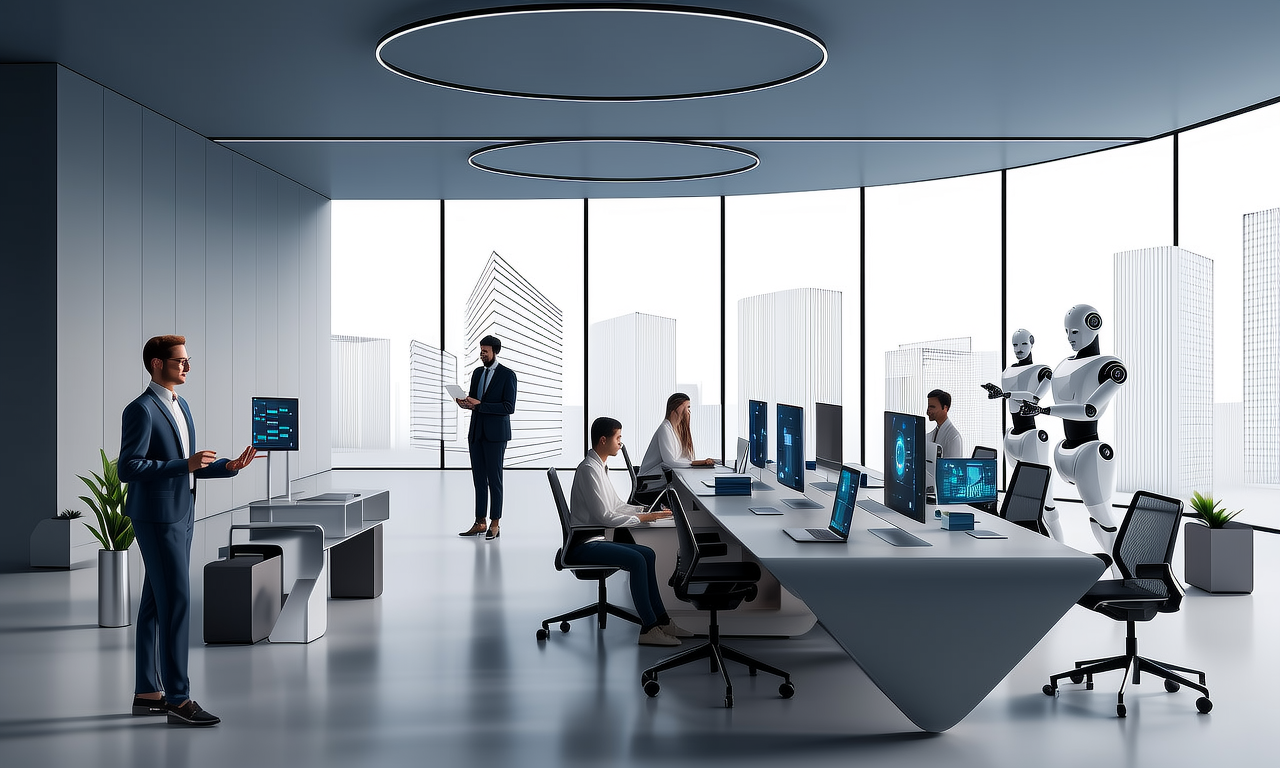
From paper documents to spreadsheets, from manual operations to natural language commands, the revolution of tools in the office has never stopped. But this time, AI may bring the most radical change, because it is not only the improvement of tools, but also in the redefinition of the concept of "office" itself. Imagine, it used to take half a day to do the financial statement, now only need to say a few words to the computer; once need to be trained for several months to master the complex functions, can now be realized in everyday language - how many people in the workplace will let this shift a long sigh of relief?
What exactly has changed with AI office tools?
The most obvious change is, of course, efficiency. Take the example of Shortcut, 10 minutes to complete the workload of a professional player in 100 minutes, this is not a small improvement. But more noteworthy is that AI is blurring the boundaries between "operational skills" and "professional competence". In the past, whether you can use Excel may be one of the thresholds for finding a job, but now, as long as you can make the needs clear, AI can help you deal with the technical details. Isn't this the equivalent of giving every workplace a technical assistant?
Interestingly, these types of AI tools are very "grounded" - they don't seek to replace humans, but rather enhance our capabilities. Like Shortcut in the retention of the traditional Excel interface based on the addition of intelligent dialog boxes, the design of how thoughtful! It doesn't overwhelm veteran users, but also allows newbies to get up to speed quickly. This reminds me of a Microsoft report last year predicted that by 2025, 90% office software will be integrated with AI assistants like Copilot.
Then again, the current AI office tool isn't perfect. As found in the test, there will still be lag when dealing with very large documents, complex formatting also needs manual fine-tuning. But let's not forget that these products are iterating at an alarming rate - three years ago AI was an "artificial retard", but now it can help us with most of the form work. From this point of view, Shortcut may be just the beginning of AI to reshape the office.
When AI permeates every office scenario
In addition to form processing, AI is actually penetrating all corners of the office. Emails are automatically categorized and replied to, meeting minutes are automatically organized, PPTs are intelligently generated... All these tasks that used to require different professional skills can now be left to AI.Gartner predicts that by 2026, AI will help employees save 150 million workdays in their daily office tasks. Imagine how much that could save businesses in a year!
What's most surprising is that AI can even do jobs that we originally thought only humans could do. Just like Shortcut can generate pixel art according to the description, which is completely beyond the scope of traditional office software. It makes me wonder: what will the office of the future look like with this kind of AI assistance? Maybe the job posting will no longer say "need to be proficient in Office", but "need to be able to think clearly and express themselves".
Of course, the development of AI office tools also brings new questions: how should workplace competitiveness be redefined when AI can handle most of the basic work? Will over-reliance on AI degrade certain skills? But these long-term considerations may not be as intuitive as the efficiency dividend brought by AI at the moment - take my own experience as an example, since the use of AI assistants, I can finally get off work on time, and this kind of improvement in the quality of life may be the most valued change for many people in the workplace.

Comment List (8):
Load More Comments Loading...