
AI is completely reshaping the rules of the game in the creative design industry, and it's no longer a multiple choice question of whether or not it will change, but a reality that has already happened. Looking at AI design tools like PosterCraft, one can't help but wonder: creative design is, I'm afraid, about to usher in the most profound change in history. Take poster design for example, traditional designers may need to spend hours to conceptualize the layout, adjust the color scheme, optimize the spacing of fonts, and now AI can compress these tasks into a few minutes to complete, and the quality is also surprisingly good. This has to make us think: how exactly are designers going to reposition their value in the future?
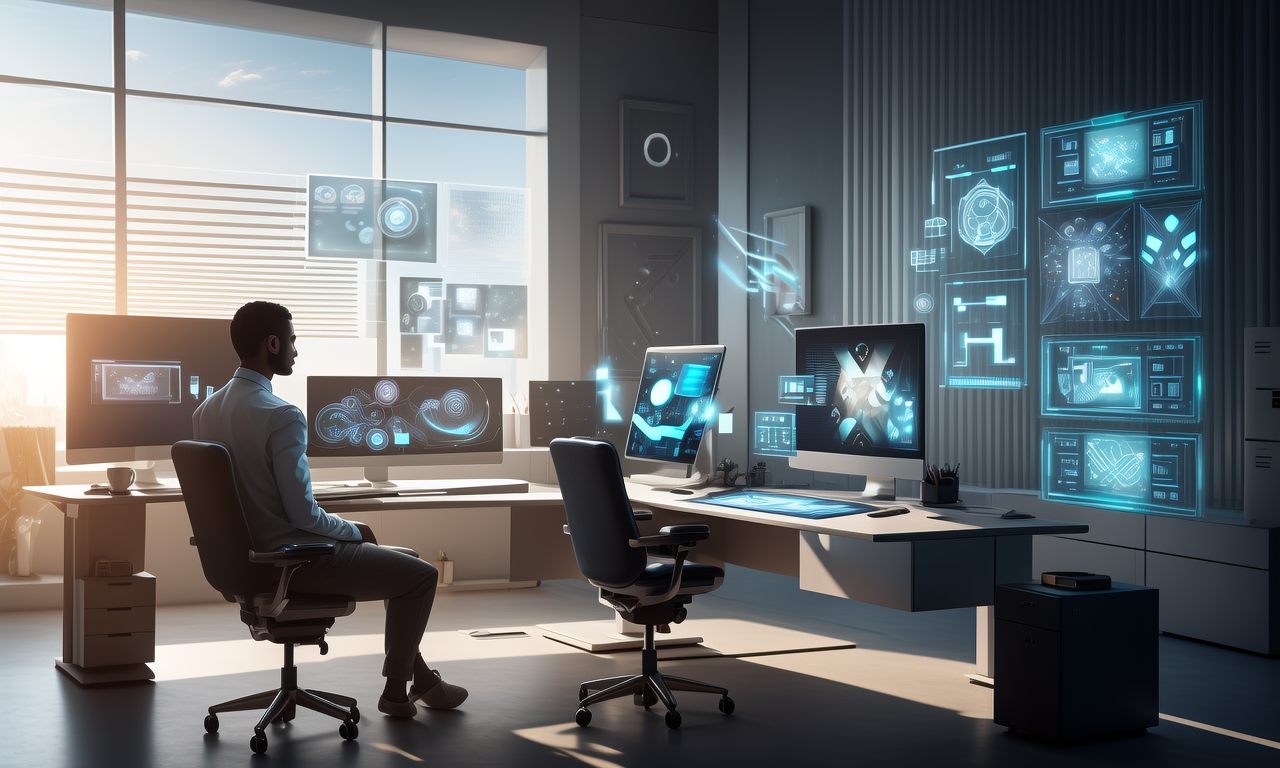
How AI is disrupting the traditional design process
While we used to go through the long process of idea-draft-revision-finish to design a poster, AI has dragged us straight into the era of "pictures in seconds". It understands advanced design concepts, such as making text blend naturally into the background instead of being rigidly superimposed. This breakthrough in texture elevates AI design from "usable" to "good". Think about it, last year was laughing at the AI design of the text layout is a mess, this year has been able to do comparable to the level of commercial-grade design software.
The new role definition of the designer
This makes us rethink the core value of designers. Maybe it's like the PosterCraft team's "four-stage optimization," where AI can handle repetitive work at the execution level, but human designers still need to be the gatekeepers for high-level aesthetic judgments and creative concepts. In fact, many designers who are using AI tools tell me that they now spend more time on concept development and final creative adjustments, and leave the intermediate execution work to AI, which in turn makes the design work more like a "director's" role - controlling the overall creative direction, while leaving the execution work to the AI. This has made design work more like being a "director" - controlling the overall creative direction without having to tweak every pixel by hand.
A senior creative director told me an interesting analogy: AI is like an all-powerful intern who can execute ideas quickly, but the final decision is still in the hands of the designer. The key is for designers to adapt to this new way of working, from executors to strategic decision makers, and the iterative feedback mechanism provided by tools such as PosterCraft is very interesting, as it allows designers and AI to form a kind of "creative dialog" - designers come up with ideas, AI provides them, and AI gives them the ideas, and AI provides them to the designers. -The designer comes up with an idea, the AI gives a solution, the designer optimizes the direction, and so on.
Future changes in design education
Seeing the speed at which AI design is advancing, design education may be about to change with it. Design schools are still spending a lot of time teaching basic tool manipulation, but in the future students may be able to use AI tools right out of the box. The focus of education may have to shift to cultivating higher-order design thinking and aesthetic judgment, such as how to assess design quality, how to develop creative strategies, and how to collaborate with AI tools. the "aesthetic-textual preference optimization" phase of the PosterCraft project is particularly worth studying, which actually teaches AI to understand what "good design" is. It's actually teaching AI to understand what "good design" is, and isn't that the essence of design education?
In short, AI will not replace the designer, but will use AI designers are likely to replace the designers do not use AI. PosterCraft such a tool gives us a lesson: AI is not a threat, but help, the key to see how to make good use of these powerful new "paintbrush". After all, even the most powerful AI needs to be harnessed by human creative souls, doesn't it?

Comment List (15):
Load More Comments Loading...