


AI DAILY BRIEF / November 7, 2026
METR concludes that Anthropic’s model performance on specific tasks may be improving at nearly twice the previous rate, but this does not equate to a doubling of the R&D team’s productivity; the omission of key evidence also makes it difficult for outsiders to verify the source of this acceleration. On the product side, Inkling 2 Small has seen both its task performance and resource consumption rise in tandem, while Doubao, Meta, and Perplexity have adjusted their quotas, interaction methods, and approaches to handling long-term tasks, respectively.
METR’s “roughly double” figure cannot be directly converted into R&D productivity.
This assessment must be understood separately from the index measurements. According to public reports, starting in October 2025, the growth rate of the Aggregate Model Capability Index (AECI) was approximately 1.9 times that of the previous period; the statistics include three unpublished internal models. Depending on the statistical assumptions used, the results vary between 1.1 and 2.9 times: retaining only “approximately two times” obscures the dependence of the estimate on statistical conditions.
Capability indices, R&D processes, and team productivity are not the same metric. According to the report, AI currently serves primarily as an assistant, and key stages of model training cannot yet be completed entirely autonomously. Therefore, this assessment does not prove that AI is already capable of independently completing model development, nor does it prove that a given development team will achieve a comparable level of efficiency gains.
The greater limitation lies at the level of evidence: Anthropic has redacted a significant amount of key evidence on the grounds of confidentiality, making it difficult for outsiders to independently verify the source of this acceleration. For R&D leaders, the key takeaway from this assessment is that progress in model capabilities may be accelerating; however, to adjust budgets, staffing, or delivery schedules based on this, they still need comparable metrics from their own projects.
Note:Faster model development does not mean the R&D team can cut the delivery schedule in half. METR’s estimate of “approximately double” is a judgment call subject to uncertainty and cannot be directly translated into a commitment regarding manpower or scheduling.
It remains difficult to verify how much of this acceleration is attributable to AI, based on publicly available evidence
Based on the same assessment, The Decoder’s report further states that Anthropic may have reached its self-imposed AI R&D acceleration warning threshold as early as July 15, 2026. “May” and “self-imposed” are key qualifiers here; this should not be portrayed as a universally recognized industry standard that has been confirmed to have been triggered.

The report also cited METR’s estimate that approximately 80% of the speedup came from the internal use of AI, rather than from an acceleration in training computing power. This is an attribution estimate, not a verified causal ratio. The report provides a range of 1.3 to 3 times for the acceleration factor; the 1.1–2.9 times range cited in the previous section and the 1.3–3 times range here should be treated separately and should not be combined to form a more definitive conclusion.
According to reports, most of the evidence deemed most informative by METR was redacted, and the audit of computing power allocation was also canceled midway. This article does not include the full text of METR’s original report; the accounts provided by The Decoder and X do not constitute two independent studies. What is worth tracking in the future is: which pieces of evidence will be made public, and whether the public will be able to use them to verify the acceleration of R&D and security investments—rather than simply continuing to circulate a single multiplier figure.
Note:The above summarizes the key points disclosed in the original text; the scope of implementation is subject to official documentation.
Inkling 2 Small: Task scores have increased, but the weighting has not yet been released.
Thinking Machines has released Inkling 2 Small, designed for developers who need to fine-tune models, with support for text and image input and adjustable thinking depth. The company reported that its score on the AutomationBench-AA agent task test rose from 5% to 46%. The model is currently available through the Tinker platform; according to the report, the weights are scheduled to be released under the Apache 2.0 license once external security testing is complete, but they are not yet available for download.
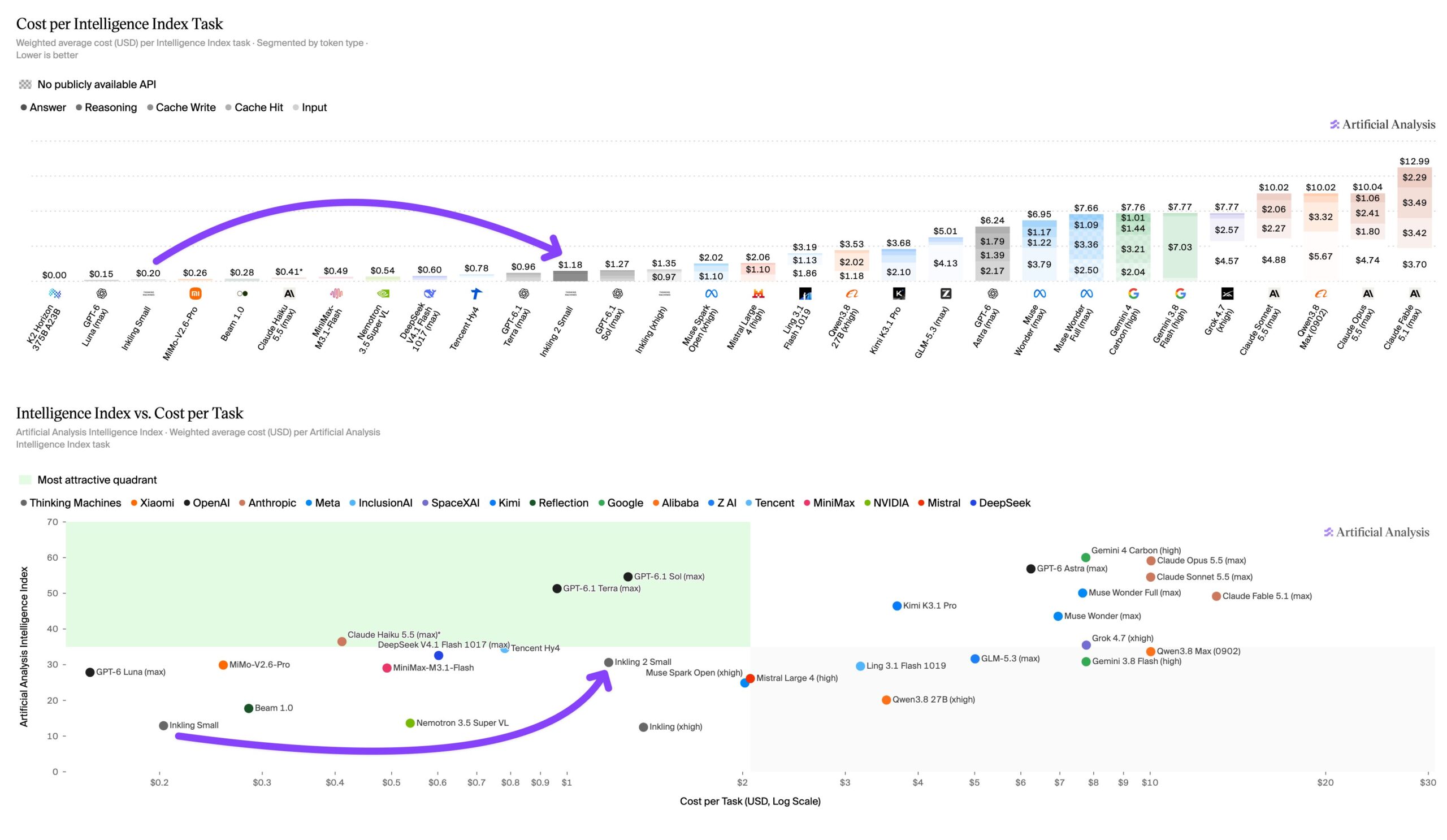
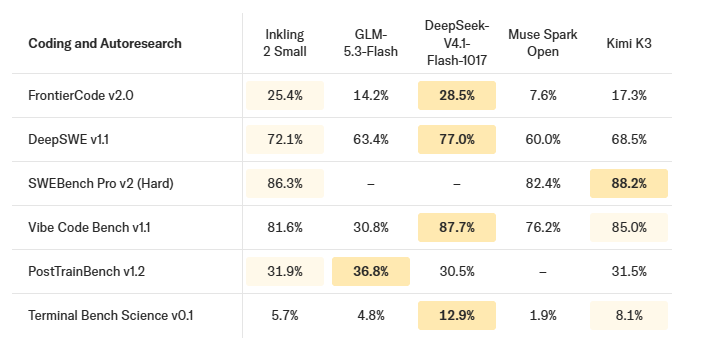
The performance improvements were accompanied by changes in cost and answer coverage. The report cited measurements from Artificial Analysis, indicating that the cost per task was $1.18—nearly six times that of the previous generation—and applied only to the corresponding test; while the hallucination rate dropped from 61% to 27%, the answer coverage rate also fell from 77% to 53%. For custom development teams, task scores, answer coverage, and weight acquisition status must be evaluated collectively; a decline in the hallucination rate alone should not be taken as evidence of a comprehensive improvement in reliability.
Note:The above summarizes the key points disclosed in the original text; the scope of implementation is subject to official documentation.
Inkling's long-term task costs should be considered in conjunction with output volume.
A report by GeekPark provided additional details on the parameters and task consumption for the same model: On November 5, TML released the Inkling 2 Small, which is primarily designed for long-term programming and office tasks. It has a total of 594 billion parameters, 17 billion inference activation parameters, and supports one million context units. While these specifications describe the model’s characteristics, they are insufficient on their own to determine deployment barriers or the cost per task.


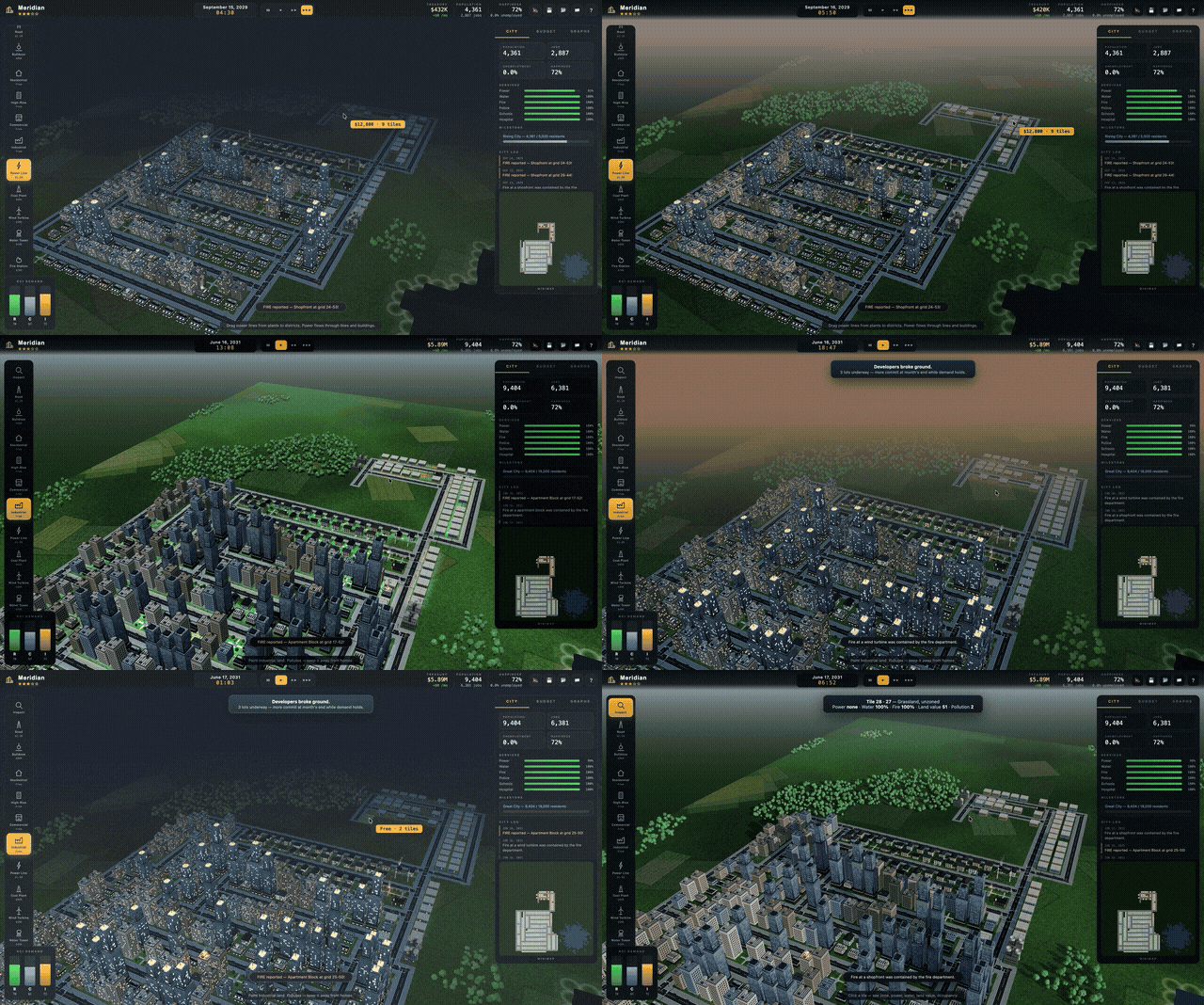
According to the AA test cited in the report, each task generated an average of approximately 150,000 tokens, with a unit cost of $1.18; the report also noted that its programming performance was not consistently superior across the board. Therefore, when selecting a model, task length, output scale, and performance outcomes should be evaluated together. Activation parameters or individual agent scores should not be used as substitutes for actual task evaluation, nor should testing costs be directly equated with operational expenses.
Note:The above summarizes the key points disclosed in the original text; the scope of implementation is subject to official documentation.
Doubao has removed the 5-hour limit on work, but the weekly quota will still be based on the selected plan.
Effective November 6, the 5-hour short-cycle quota limit for the Doubao Work Personal Edition has been removed. Previously, the service used a dual-cycle quota system with 5-hour and 7-day cycles, meaning users could reach the short-cycle limit even if they still had weekly quota remaining. Following this adjustment, users can now consolidate their research, write content, and make multiple rounds of revisions within their remaining weekly quota.
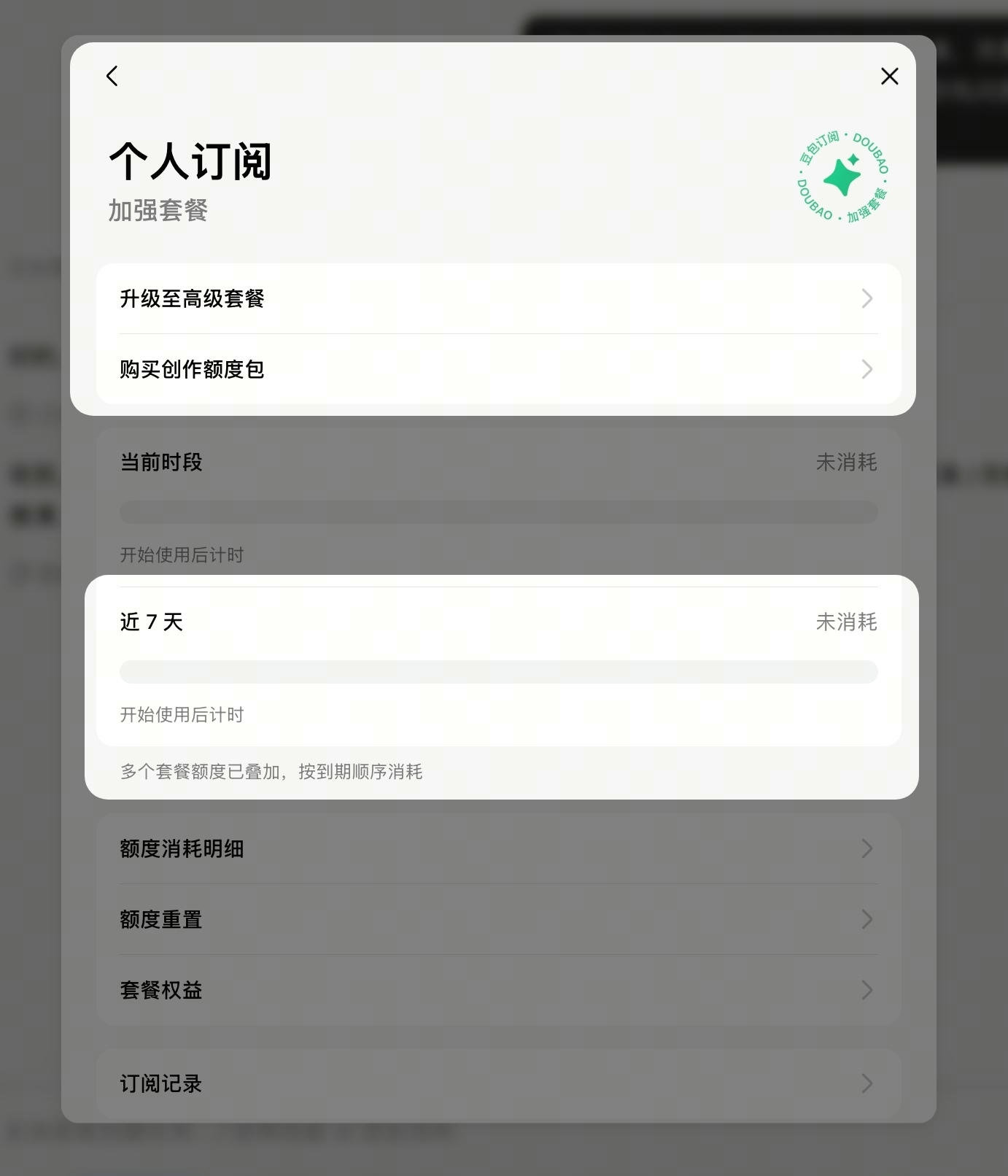
This change affects the pace at which your data allowance is used; it does not imply an increase in the total data allowance for your plan, nor does it mean unlimited usage. Weekly data allowances and other rules remain in effect according to your specific plan and can be viewed under “Settings—Subscriptions & Data Allowance Management.” For users who are working on proposals, editing presentations, or conducting in-depth research, eliminating one waiting restriction offers tangible value; however, you should still keep an eye on your remaining weekly quota when tackling tasks in bulk.
Note:The above summarizes the key points disclosed in the original text; the scope of implementation is subject to official documentation.
Meta Spaces Turns Chat Requests into Editable Spaces
According to The Verge, Meta is rolling out "Spaces" to all Muse users: After describing their needs, users can create shopping centers, school bulletin boards, or music trackers, and within these spaces, they can check off tasks, add notes, and edit directly, as well as continue to make adjustments through conversation. Spaces can also be placed in the sidebar or on the main tab, and their display times can be scheduled.

Updating backend information is subject to certain conditions: Muse can only update prices, dates, and other content after connecting to the relevant applications. Space sharing and multi-user collaboration are still in the exploratory phase and cannot be considered officially launched features. For the product team, the key takeaway from this change is that chat threads are now becoming interfaces that can be sustainably used and modified; however, their collaborative value will depend on the implementation of future features.
Note:The above summarizes the key points disclosed in the original text; the scope of implementation is subject to official documentation.
Perplexity Launches "Teammates"; The Max Plan Sets the Entry Threshold
Perplexity has launched "Teammates," designed to run around the clock and provide ongoing support for long-term projects. Each Teammate runs on a separate virtual machine equipped with a desktop and a browser; users can view progress in a dedicated session within the Perplexity app and interact with them via Slack.

In terms of its positioning, Teammates is more akin to a “long-term, on-call agent” than a one-time Q&A window. Public documentation describes it as capable of continuously advancing projects in a standalone environment and bringing progress back into in-app conversations or Slack; while this changes the way tasks are organized, it does not yet equate to proven unattended delivery.
Note:The minimum requirement is the Max plan at $200 per month; the publicly available excerpt does not specify the full quota, geographic coverage, or additional billing terms, so this price should not be interpreted as the total operating cost. The purchasing party must still verify the task quota and quality of completion, as the product’s positioning alone does not guarantee long-term reliability.
Special Campaign Targeting Short Video Series Covers AI “Face and Voice Cloning” and Promotion Activities
According to reports, the latest special campaign launched by the National Radio and Television Administration to address vulgar and formulaic content in micro-short dramas will run from November 1, 2026, through the end of December. On the production side, the campaign will focus on vulgar and inappropriate content, the filing and review of special subject matter, as well as issues such as AI-generated “face swapping” and “voice cloning.”

Distribution channels are also subject to regulation, including titles, promotional materials, comment streams, clips used to drive traffic, as well as situations such as rebroadcasts after changing the title or the lead actor’s name, and homogenization of recommendations on homepages and charts. For AI content creators and platform operators, the scope of inspection must cover the actual content, promotional materials, and distribution processes; reviewing only the final episodes is insufficient to address the regulatory issues listed in the report.
Note:The above summarizes the key points disclosed in the original text; the scope of implementation is subject to official documentation.
Reference Links
- X: METR’s “roughly double” cannot be directly converted into R&D productivity
- THE DECODER: How Much of the Acceleration Is Due to AI? Public Evidence Remains Difficult to Verify
- THE DECODER: Inkling 2 Small task scores have increased, but the weighting has not yet been released
- geekpark.net: When evaluating the cost of Inkling's long-term tasks, it’s important to consider them alongside the output.
- leiphone.com: Doubao has removed the 5-hour limit on work tasks; the weekly quota will still be based on the selected plan.
- The Verge: Meta Spaces Turns Chat Requests into Editable Spaces
- THE DECODER: Perplexity Launches "Teammates"; The Max Plan Sets the Bar for Access
- ithome.com: Special Campaign Targeting Micro-Short Videos Covers AI “Face and Voice Cloning” and Promotion Practices


Comment List (0):
Load More Comments Loading...