


To be honest, whenever I was tortured by a bunch of formulas and vlookup functions in Excel, I would think: how nice it would be if I could manipulate the table by talking! The emergence of tools such as Shortcut makes me realize that natural language interaction may really change the way we use software. I remember last year Gartner had a prediction that by 2025, 70% employees will use natural language processing technology to complete their work every day - although the data may be a bit optimistic, but the trend is really unstoppable.
When language becomes the new programming
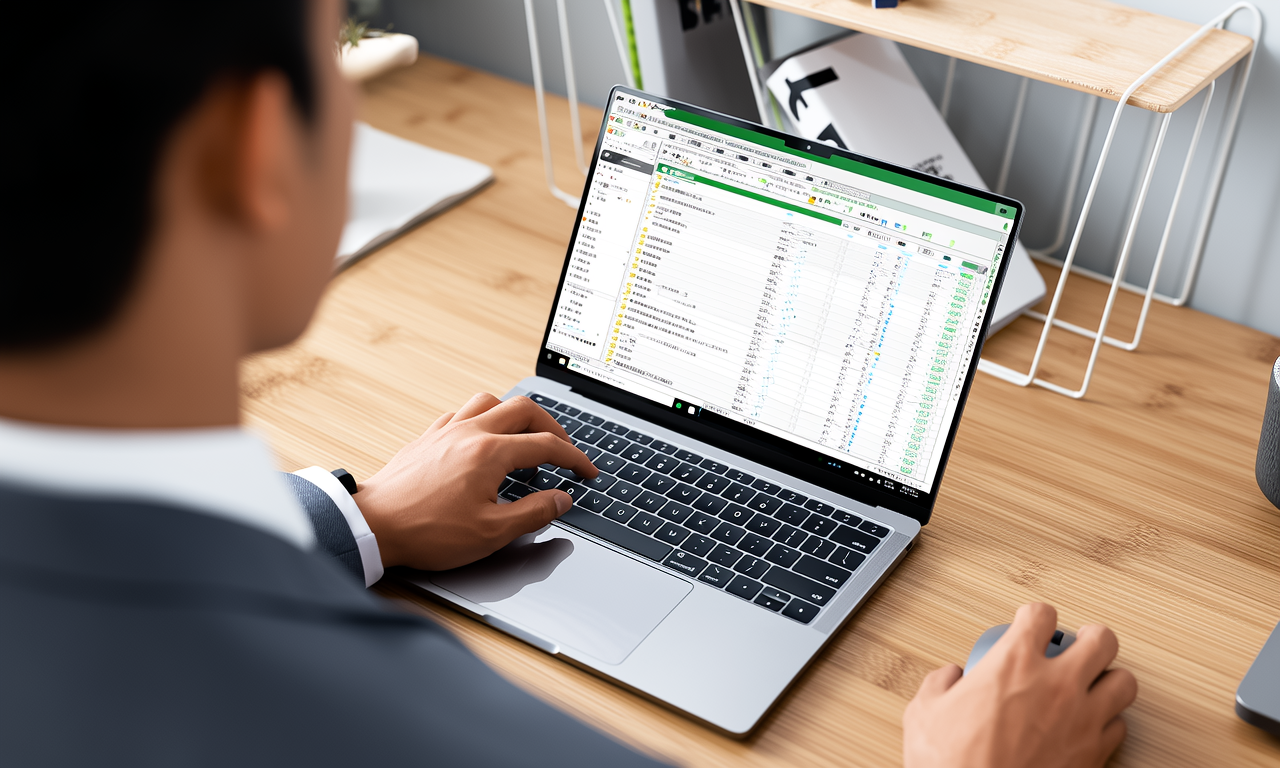
What struck me most when I tried Shortcut was the fact that it actually did what I said: "Mark my top 101 TP3T customers in red"! Traditional software requires a series of cumbersome operations: filtering, sorting, conditional formatting... Now it's just a matter of talking. Microsoft Research Asia released interesting data last year: AI can reduce the average time to complete office tasks by 68%, and among them, natural language interaction contributes to the main efficiency gains.
But there are bottlenecks in this technology. When I asked Shortcut to process a complex financial statement last week, it got some of the associated fields mixed up - it seems that the AI's understanding needs to be improved in highly specialized areas. After all, natural language is ambiguous, and "calculated margin" in a financial context could mean gross margin, net margin, or operating margin.
The Language Revolution in Real Scenarios
I have a friend in the e-commerce company to do data analysis, their team used a similar tool, the weekly report production time from 3 hours to 20 minutes. The best thing is that when the boss temporarily wants to add a "correlation analysis between the return rate and temperature change in various regions", no longer need to stay up all night to write formulas, just say a few words and the results will come out. However, he also complained that the AI sometimes misinterprets "ring ratio" as "year-on-year" - it seems that natural language interaction not only brings convenience, but also puts forward new requirements on the accuracy of our expression. It seems that natural language interaction brings convenience but also puts new demands on the accuracy of our expressions.
From a technology perspective, behind this is the convergence of NLP (Natural Language Processing) and RPA (Robotic Process Automation). IDC reports that by 2026, the market for this type of converged technology will reach a staggering $18.4 billion. But what I think is more noteworthy is the change in interaction: as programming languages become everyday language, ordinary people who can use natural language suddenly gain the ability to harness data.
While in the short term, traditional methods of operation may still coexist with natural language interaction, in the long term, the "talk to work" model is likely to become mainstream. After all, who doesn't like to get things done in the most natural way possible? Seriously though, I still miss the days of writing VBA code manually - it's like an old driver facing a self-driving car, knowing it's more convenient, but not willing to put down the steering wheel...

Comment List (3):
Load More Comments Loading...