


To be honest, when I first heard about the Nanobrowser program, I thought to myself: isn't this the turning point we've all been waiting for, where AIs are no longer just "consultants" who sit around and talk, but "colleagues" who can actually do the work? AI is no longer just a "consultant" who sits there and talks, but a "colleague" who can actually work. Imagine how much of our precious time is taken up by those boring web operations - repeatedly switching pages, copying and pasting data, and comparing prices? Now you can actually let AI do it for you, and it works so well! It makes me wonder: what exactly will AI automation transform the way we work into?
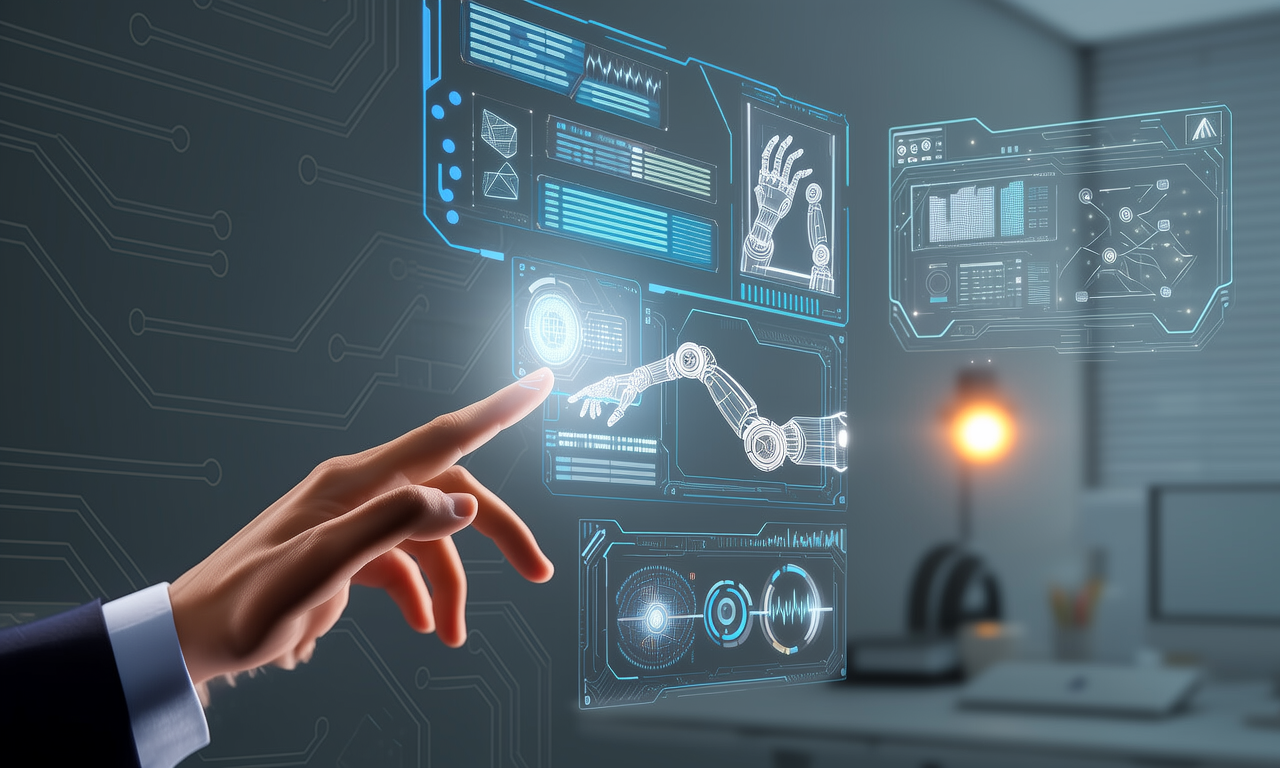
Reconfiguration of job content: from implementation to decision-making
I remember last year when I was helping a friend to do market research, it took two days just to collect information about competitors. If we had a tool like Nanobrowser at that time, it would have taken only a few minutes. It's not just a matter of efficiency, but more importantly, it's redefining what we do. The repetitive tasks of data collection and information organization that used to need to be done manually are now handled quickly and well by AI. So what do we humans do? Making more important decisions and analyzing, of course! As Nanobrowser demonstrates, all you need to do is tell it "what I want" and let the AI do the rest, a shift that reminds me of the industrial revolution when machines replaced manual labor, only this time it's the repetitive part of mental labor that's being replaced.
Shift in skill requirements: from operating to commanding
Interestingly, the skills needed now are completely different. It used to be that we had to learn all sorts of web manipulation skills, memorize complex shortcuts, and even know a little bit of programming to be efficient. But now? As Nanobrowser demonstrates, you just need to use natural language to tell the AI what you want to do. What this requires is the ability to think clearly and logically and express requirements precisely - after all, you have to know what to ask for in order to command the AI to perform it. Suddenly I felt that it was like going from "operator" to "commander", the nature of the work had changed fundamentally.
And this change is happening in every position. Marketers no longer have to manually collect information on competing products, researchers don't have to repeatedly swipe through thesis websites, and even ordinary consumers can easily compare prices. Data shows that the efficiency of information-gathering jobs has increased by an average of 5-8 times with the use of AI automation tools, which is a truly impressive number! But then again, this also brings new challenges: when we hand over the execution part to AI, how to make sure its judgment meets our expectations? How to design more precise instructions? These are all new skills we need to learn.
Intelligent upgrade of workflow
What amazes me most about Nanobrowser is its multi-intelligence collaboration model. The planner and the executor have their own roles. Isn't this the ideal work team configuration? In reality, we often need to break down complex tasks into specific steps and then execute them one by one. Now AI not only understands the intent of the task, but can also disassemble and execute it autonomously, which simply pushes workflow intelligence to a new height.
Imagine what it would be like if companies automated all their internal processes in this way. The sales team does not have to manually organize customer information, operations staff do not have to repeatedly check data reports, all repetitive web operations can be handed over to the AI. this is not a simple efficiency improvement, but a fundamental change in the working model. Research shows that there are already 30% companies piloting similar AI automation tools, and this number is expected to double in the next two years. To be honest, this trend is coming faster than we even imagined!
Of course, AI automation isn't everything. Just as Nanobrowser still has moments of inaccurate recognition, complex business scenarios still require human gatekeepers. But there's no denying that it's freeing us from non-value-added, repetitive labor and allowing us to focus on work that actually creates value. This is perhaps the point of technological development - not to replace humans, but to make us a better version of ourselves.

Comment List (7):
Load More Comments Loading...