


Recently saw Cognition Labs launched a fully autonomous software engineer Devin, can not help but make me think: how AI is reshaping the future of programming education? In the past, learning to program had to die syntax, debugging and reporting errors, and now AI code assistants can make up for it in real time, automatically correct errors, and even directly generate functional code. This is like giving every beginner a 24-hour online programming tutor, smoothing out the learning curve. But interestingly, computer courses at top universities have instead begun to emphasize algorithmic thinking and system design - because mechanical coding work is gradually being taken over by AI.
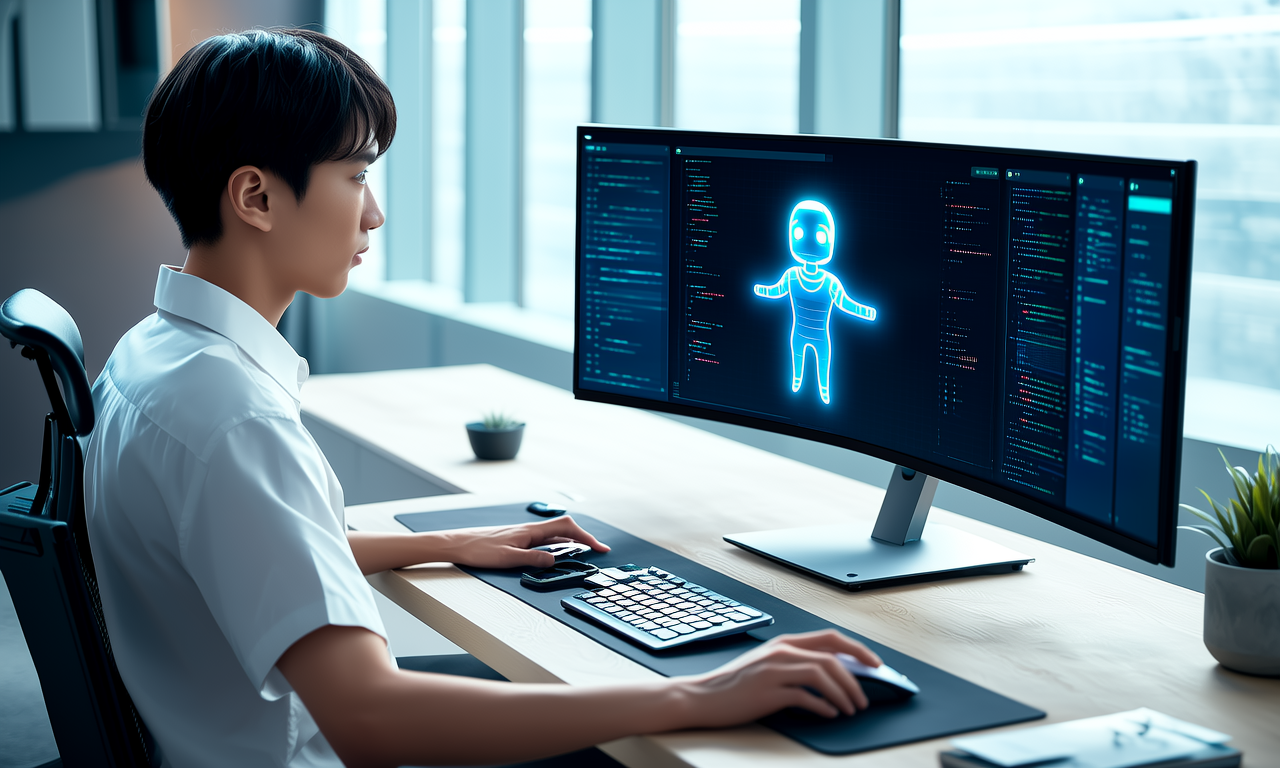
Three Disruptive Changes in Programming Education
The first layer of change comes at the tool level. IDE plug-ins like Claude Code understand programming intent through natural language. A student describes "I want to make a shopping cart function," and the AI generates the basic code framework. Stanford test data show that students using AI assistance to complete their homework speed increased by 40%, but professors also found a phenomenon: excessive reliance on AI students, in the final handwritten code exam performance is significantly worse.
The second layer is the innovation of teaching method. Now some MOOC platforms are beginning to use "AI pair programming" mode, learners can work with virtual programming partners in real time.MIT developed Pseudo Professor AI, not only can answer the question, but also intentionally buried bugs in the code to train the debugging ability. This kind of interactive learning, so that the original boring syntax practice into a puzzle game.
The most profound change occurred in the curriculum design. Carnegie Mellon University's new "software engineering in the age of AI" class requires students to use AI tools to complete the project, but the grading criteria focus on the examination of architectural design documents and code review capabilities. Their director of faculty research said bluntly: "The core competitiveness of future programmers is to know what to let AI write, and to judge whether AI writes correctly."
Those capabilities that AI can't replace for now
Interestingly, though, 87% of respondents in Silicon Valley's developer research believe that AI has instead made system design skills more valuable. When basic coding becomes easy, how to disassemble complex requirements and design scalable architectures becomes a scarce skill. It's like when autonomous driving became popular, race car drivers became more popular instead - only instead of gear shifting skills, the competition was tactical strategy.
Educators are looking for a balance: using AI to lower the barrier to entry while holding onto the essence of computer science. Perhaps the programming classroom of the future will become like this: in the first half of the class, AI will be used to quickly realize the prototype, and in the second half of the class, the whole class will review the code generated by AI and discuss what needs to be manually optimized. This "human-computer collaboration" teaching mode may be the future form of programming education.

Comment List (3):
Load More Comments Loading...